
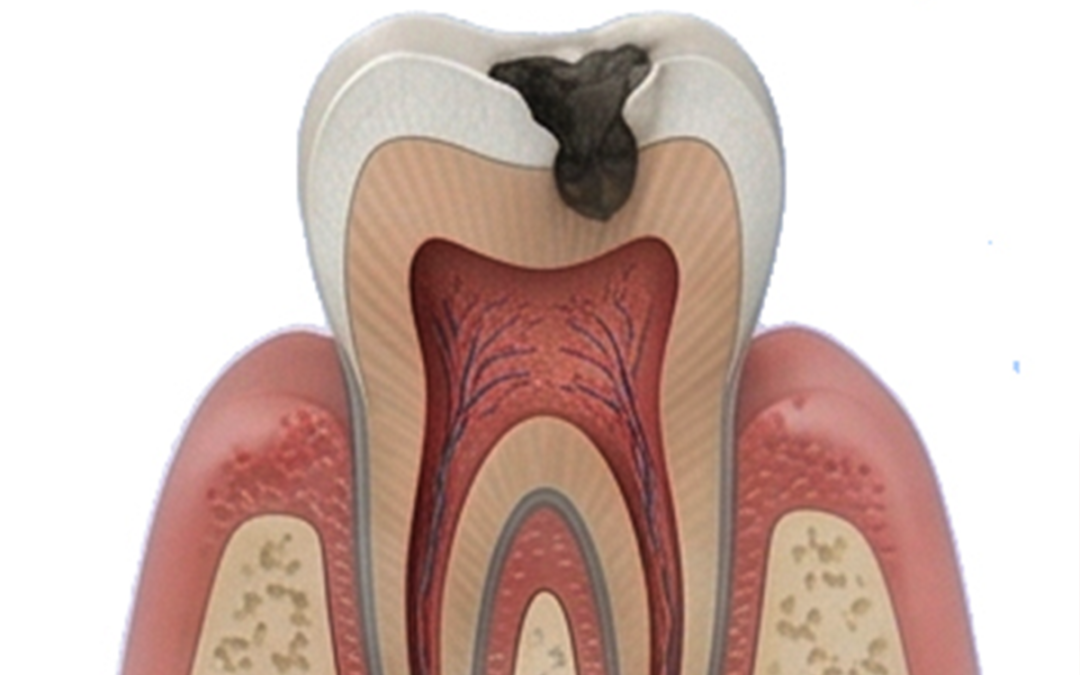
What Tooth Decay Is
Tooth decay is enamel dissolving. Bacteria in plaque feed on sugar and produce acid, and that acid pulls minerals out of the tooth.
Decay is silent until it is deep. By the time a tooth aches, the damage has usually reached the nerve.
That is the single most important thing to understand about it. Waiting for pain means waiting for the expensive stage.
How It Starts
Every time you eat something sugary, the acid attack lasts about twenty minutes. Saliva then neutralises it and puts minerals back.
Your teeth lose and regain minerals all day. Decay happens when the losing side wins for long enough.
How often you eat sugar matters more than how much. One chocolate bar causes one attack. Sipping a sweet drink all afternoon causes a continuous one.
Saliva flow drops while you sleep, so anything sweet at bedtime sits on the teeth for hours with no defence.
The Stages
A white spot
The first sign is a chalky white mark, usually near the gum. No hole has formed yet.
This stage can be reversed. Fluoride and better cleaning can put the minerals back, which is why early visits matter so much.
Through the enamel
Once the surface breaks, a cavity has formed. It cannot heal, and it needs a filling.
Into the dentine
The layer under the enamel is softer, so decay spreads faster here. This is where sensitivity to sweet, hot and cold usually starts.
Into the nerve
Bacteria reach the pulp, and the tooth becomes inflamed or infected. The pain is often constant and worse at night.
At this point a filling is no longer enough. The tooth needs root canal treatment or removal.
Signs to Watch For
- Sensitivity to sweet things, which often comes before cold.
- A white, brown or black mark on a tooth.
- Food catching in the same spot every time you eat.
- A rough edge you keep finding with your tongue.
- Bad breath or a bad taste that does not clear.
- Any ache, especially one that wakes you at night.
Food trapping in one place is the sign people ignore most. It usually means decay has opened a gap between two teeth.
Where Decay Starts
Three places account for most cavities, and all three are hard to clean.
- The grooves on back teeth. They are narrower than a bristle, so sealants are used to close them.
- Between two touching teeth. Only floss reaches here, and only an x-ray finds it early.
- At the gum line. Common where gums have receded and the softer root is exposed.
Decay also forms under old fillings and around the edges of crowns. That is one of the things your dentist is checking at every visit.
How It Is Treated
Treatment depends entirely on how far it has gone.
- A white spot. Fluoride, cleaning advice, and monitoring.
- A small to moderate cavity. A filling, in one visit.
- A large cavity on a back tooth. An inlay or onlay, or a crown.
- Decay reaching the nerve. Root canal treatment, then a crown.
- A tooth too broken down to save. Extraction, then a replacement.
Preventing It
- Brush twice a day with fluoride toothpaste.
- Spit, and do not rinse. Rinsing washes the fluoride away.
- Clean between the teeth daily.
- Keep sugar to mealtimes rather than spreading it through the day.
- Drink water between meals instead of juice or cola.
- Keep your check-ups, so problems are caught while small.
Not rinsing after brushing is the change most people have never heard. Leaving that thin layer of fluoride on the teeth makes a measurable difference.
Decay in Children
Baby teeth have thinner enamel, so decay moves through them faster. A cavity can reach the nerve in months rather than years.
The most common pattern is decay on the upper front teeth from bottles and sweet drinks. See infants and toddlers for prevention from birth.
Adults Get Decay Too
Decay is treated as a childhood problem, but the risk rises again in later life. The reasons are different.
Gums recede with age, exposing root surface. Root surface has no enamel at all, so it decays faster than the crown of the tooth.
Many common medications reduce saliva, which removes your natural buffer against acid. Tell your dentist what you take.