
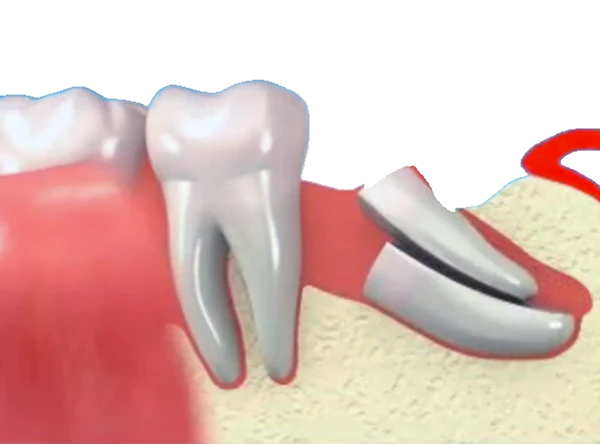
When a Tooth Cannot Be Saved
Removing a tooth is the last option, not the first. Your dentist will try to repair it before recommending extraction.
A tooth is removed when keeping it would cause more harm than losing it. That decision is made on the x-ray and the examination together.
- Decay so deep that no filling or crown will hold.
- Advanced gum disease, where the supporting bone has gone and the tooth is loose.
- A tooth broken below the gum line.
- A cracked root, which cannot be repaired.
- Infection that has not settled after root canal treatment.
- Crowding, where a tooth is removed to make room for orthodontic treatment.
Wisdom teeth are a category of their own. See wisdom tooth removal for those.
Simple and Surgical Removals
A simple extraction is used when the tooth is visible and reachable. It is loosened and lifted out whole.
A surgical extraction is needed when the tooth is broken at the gum line, or buried. A small opening is made in the gum first.
The tooth is sometimes divided and taken out in pieces. That sounds worse than it is, and it removes less bone than lifting it whole.
What Happens on the Day
- Your dentist reviews the x-ray and confirms the plan with you.
- Local anaesthetic is given, and you wait until the area is fully numb.
- The tooth is loosened. You feel firm pressure, but not pain.
- The tooth comes out, and the socket is cleaned.
- Stitches are placed if needed, and you bite on gauze to form a clot.
Pressure without pain is normal and expected. Tell your dentist immediately if you feel anything sharp, because more anaesthetic can be given.
Arrange a lift home if you are having sedation. For a routine extraction under local anaesthetic, most people drive themselves.
Healing
A blood clot forms in the socket within hours. That clot is what everything else depends on, so protect it.
- First 24 hours. Bite on gauze, rest, and use a cold compress. Do not rinse at all.
- Day two. Begin warm salt water rinses after meals.
- Days two to three. Swelling peaks, then starts to improve.
- Week one. Soft food, chewing on the other side.
- Weeks three to four. The gum has closed over the socket.
- Several months. The bone underneath fills in fully.
Do not smoke, and do not use a straw for at least a week. Both create suction that pulls the clot out.
Dry Socket
A dry socket is a lost clot, leaving bone exposed. It is the most common complication after an extraction.
The sign is pain that worsens around day three rather than easing. It often spreads towards the ear, with a bad taste.
It is treated quickly. Your dentist cleans the socket and places a dressing, and the relief is usually immediate.
Replacing the Tooth
Discuss the replacement before the extraction, not after. The plan affects how the socket is treated on the day.
- Implants replace the root as well as the tooth, and stand alone.
- Bridges anchor to the teeth on either side of the gap.
- Dentures suit several missing teeth, and come out for cleaning.
A back tooth that nobody sees still needs replacing. The reason is function, not appearance.
What Happens If You Leave the Gap
Teeth do not stay still. The ones beside the gap tilt into it, and the one above or below drifts down towards it.
Your bite changes as that happens. Tilted teeth are harder to clean, so decay and gum problems follow.
The bone in the gap also shrinks over time. Leaving it for years can limit which replacements are still possible later.
When to Phone the Practice
- Bleeding that has not stopped after several hours of firm pressure.
- Pain that increases from day three onwards.
- Swelling spreading to the eye or neck.
- Difficulty swallowing or opening your mouth.
- A fever.
If You Are Anxious About It
Extraction is the treatment patients dread most, usually from stories rather than experience. The reality is a numb tooth and firm pressure.
Say so when you book. Your dentist can explain each step before doing it, which many people find removes most of the fear.
Agree a stop signal, such as raising your hand. Sedation is available where anxiety is severe.
Related Reading
- Wisdom tooth removal
- Root canal treatment, which often saves a tooth instead
- Gum disease
- Implants