
What Is a Dental Implant?
A dental implant is a small titanium post placed into the jawbone where a tooth used to be. It takes the place of the tooth root.
Once the bone has healed around the post, your dentist fits a crown on top. The result is a replacement tooth that stands on its own without leaning on the teeth beside it.
An implant is the only replacement that also replaces the root. That matters more than most people realise, and the next section explains why.
Why the Root Matters
Your jawbone keeps its shape because chewing loads it through the tooth roots. Remove a root and the bone in that spot slowly shrinks away.
That is why a long-standing gap changes the shape of your face, and why dentures that fit well at first start to loosen over the years. An implant keeps loading the bone, so the bone stays.
Neither a bridge nor a denture does this. Both sit above the gum.
Who Implants Suit
- Anyone missing a single tooth who would rather not cut down the teeth either side
- People missing several teeth in different places
- Denture wearers whose lower denture keeps moving
- Anyone who has lost a tooth to injury and still has good bone
- People who want the replacement to feel closest to a natural tooth
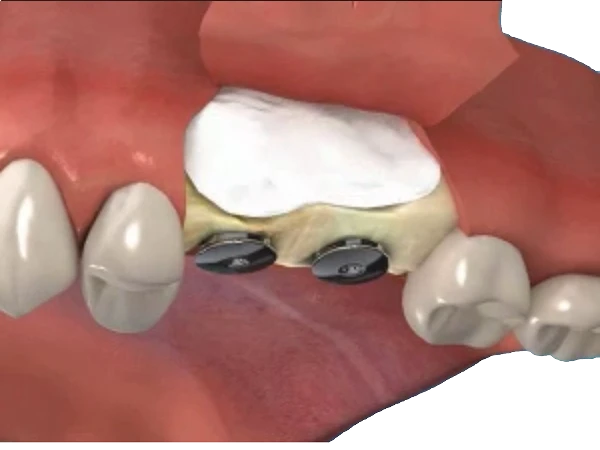
Your dentist checks the bone with an X-ray or a scan first. Where bone has already been lost, a graft may be needed before an implant can go in.
Implant, Bridge or Denture?
| Implant | Bridge | Denture | |
|---|---|---|---|
| Replaces the root | Yes | No | No |
| Neighbouring teeth cut down | No | Yes | No |
| Fixed or removable | Fixed | Fixed | Removable |
| Treatment time | Months | Weeks | Weeks |
| Protects the jawbone | Yes | No | No |
Read more about dental bridges and dentures, or see all the options together on our missing teeth page.
What the Treatment Involves
- Your dentist examines the site and takes a scan to check the bone.
- The implant post goes into the jawbone under local anaesthetic.
- The bone heals around the post over several months. This stage cannot be rushed.
- Your dentist fits a small connector, then takes an impression.
- The final crown goes on and your bite is checked.
Most of the treatment time is healing rather than appointments. You are not without a tooth throughout, as a temporary can usually be fitted.
You feel pressure rather than pain during placement. Expect some swelling for a few days afterwards.
One Implant or Several?
You do not need an implant for every missing tooth. Two implants can carry a bridge across a longer gap, which costs less than replacing each tooth individually.
Where a whole arch is missing, a small number of implants can support a fixed bridge or hold a denture firmly in place. Your dentist works out the fewest implants that will do the job properly for your jaw.
Caring for an Implant
An implant cannot decay. What it can lose is the gum and bone that hold it, and that is the same process as gum disease around a natural tooth.
- Brush twice daily and clean around the implant every day
- Use the interdental brush or floss your dentist recommends for the shape
- Stop smoking, which raises the risk of implant failure
- Wear a night guard if you grind your teeth
- Come for regular check-ups so we can inspect the gum around it
Keeping your remaining natural teeth healthy matters too. Read about gum disease, the leading cause of adult tooth loss.
Questions About Implants
How long do implants last? Implants are designed as a long-term replacement and many last decades. What fails is usually the gum and bone around the implant rather than the post itself, so daily cleaning decides the outcome.
Is the treatment painful? Placement happens under local anaesthetic and most patients describe it as easier than they expected. Soreness for a few days afterwards is normal.
Can anyone have an implant? No. You need enough healthy bone, healthy gums, and to be a non-smoker or willing to stop. Uncontrolled diabetes and some medications also affect healing. Your dentist assesses this before recommending one.
Related Reading
- Dental Bridges – fixed replacement without surgery
- Dentures – removable replacement for several teeth
- Dental Crowns – what sits on top of the implant
- Gum Disease – the leading cause of adult tooth loss
- Dental Extraction – when a tooth cannot be saved