
Straighten My Teeth Johannesburg
Tooth Replacement OptionsCrooked teeth change more than how your smile looks.
Straighten my teeth contents
Crooked teeth change more than how your smile looks.
Teeth that do not meet properly are harder to clean, wear unevenly, and put more strain on the jaw joint. Crowding traps plaque exactly where a brush cannot reach, which is a direct route to gum disease.
The good news
Every case is different, and there are more options now than braces alone. The right one depends on your age and how far the teeth have to move.
What Crooked Teeth Actually Do
Straightening is not only cosmetic. Where teeth overlap, plaque collects along the crowded gum line and stays there, because floss and a brush cannot get in properly. That is how crowding turns into gum inflammation over years rather than weeks.
A bite that meets unevenly also wears some teeth far faster than others, and can leave the jaw joint working harder than it should. Your dentist will tell you which of these apply to you, rather than treating every crooked tooth the same way.
Why Teeth Grow Crooked
The choice of treatment depends on how far the teeth have to move, not on which appliance appeals to you. Minor front-tooth crowding can be finished in a few months. Moderate crowding usually runs twelve to eighteen months. Correcting the bite itself takes longer, because the jaws relate to each other differently.
Your dentist gives you a timeline after the assessment, once x-rays and impressions show what actually has to move. Retainers then hold the result, and stopping those early is the most common reason straightened teeth drift back.
Signs Worth Paying Attention To
You may notice food packing between the same two teeth, one tooth wearing down faster than its neighbours, gums that bleed in one crowded spot, or jaw ache in the morning. Any of those is worth an assessment.
Straightening Children's Teeth
Some problems are far easier to guide than to correct later. Treating a narrow arch or a crossbite while a child is still growing can reduce what is needed in the teenage years.
Bring your child for an assessment around age five or six. Enough adult teeth have arrived by then to show how the bite is developing, and there is still growth left to work with. Come sooner if you notice mouth breathing, snoring or thumb sucking.
Your Straightening Options
There is no single right answer for everyone. The best option depends on your age, how much movement is needed, and whether the cause is the teeth themselves or the way the jaw has grown.
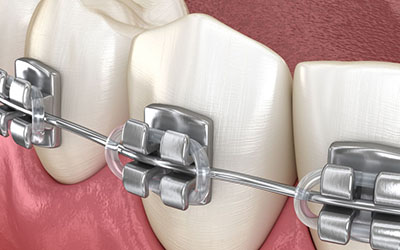
Traditional braces
Fixed brackets and wires, adjusted at each visit. The most predictable option for complex movement, bite correction and larger gaps. Because they are fixed in place, treatment does not depend on remembering to wear anything.
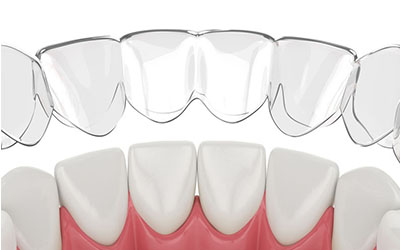
Clear aligners
A series of removable trays, each moving the teeth slightly. Close to invisible, and taken out for meals and brushing. They suit mild to moderate crowding, and only work while worn, which means about 20 to 22 hours a day.
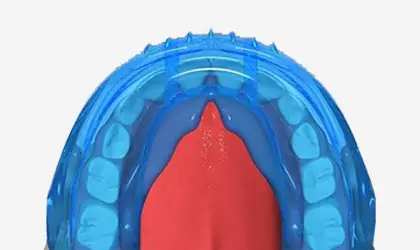
Myobrace
Treats the habits that pushed the teeth out of line, rather than forcing them back. Aimed at children while the jaw is still growing, and addresses mouth breathing, tongue position and swallowing so the correction holds.
After Orthodontic Treatment
Retainers Keep the Result
This is the part people are least often told about, and it decides whether the treatment lasts. Teeth drift back towards where they started. The fibres holding a tooth in the bone have a memory, and they pull for a long time after treatment ends.
- A fixed retainer is a thin wire bonded behind the front teeth, and stays there
- A removable retainer is worn at night, often for years
- Most people are given one or the other, and some are given both
- Stopping early is the most common reason straightened teeth move again
Treat the retainer as part of the treatment rather than an optional extra afterwards.
Ready to Straighten Your Teeth?
A consultation is the clearest way to know exactly where you stand and what is possible for your situation.
Straight Teeth Consult
Book an assessment
Book an assessment at any of our Johannesburg practices.
Examination & Records
Your dentist examines the bite, takes x-rays and discusses what you want changed.
Treatment Plan
You are shown the options that genuinely apply to your case with timelines
Impressions or a scan
Impressions or a scan are taken once you decide.
Treatment
Treatment beings as per orthodontic treatment plan
Frequently Asked Questions
Am I too old for braces?
No. Teeth move at any age, because the bone around them keeps remodelling throughout life. Adult treatment can take a little longer, and healthy gums matter more, but age itself is not a barrier.
Does straightening teeth hurt?
Expect tenderness for a few days after braces are fitted or adjusted, and after changing to a new aligner. It feels like pressure rather than sharp pain, and ordinary painkillers manage it.
How long does treatment take?
Minor front-tooth crowding can be finished in a few months. Moderate crowding usually runs twelve to eighteen months. Bite correction takes longer. Your dentist gives you a timeline after the assessment.
Braces or clear aligners?
Braces suit complex movement and bite correction, and work without you having to remember anything. Aligners suit mild to moderate crowding where appearance during treatment matters. Your dentist will say honestly if your case is beyond what aligners can achieve.
Will my teeth move again afterwards?
They will if you stop wearing your retainer. This is the single most common reason people need treatment twice. Wear it as instructed and the result holds.