
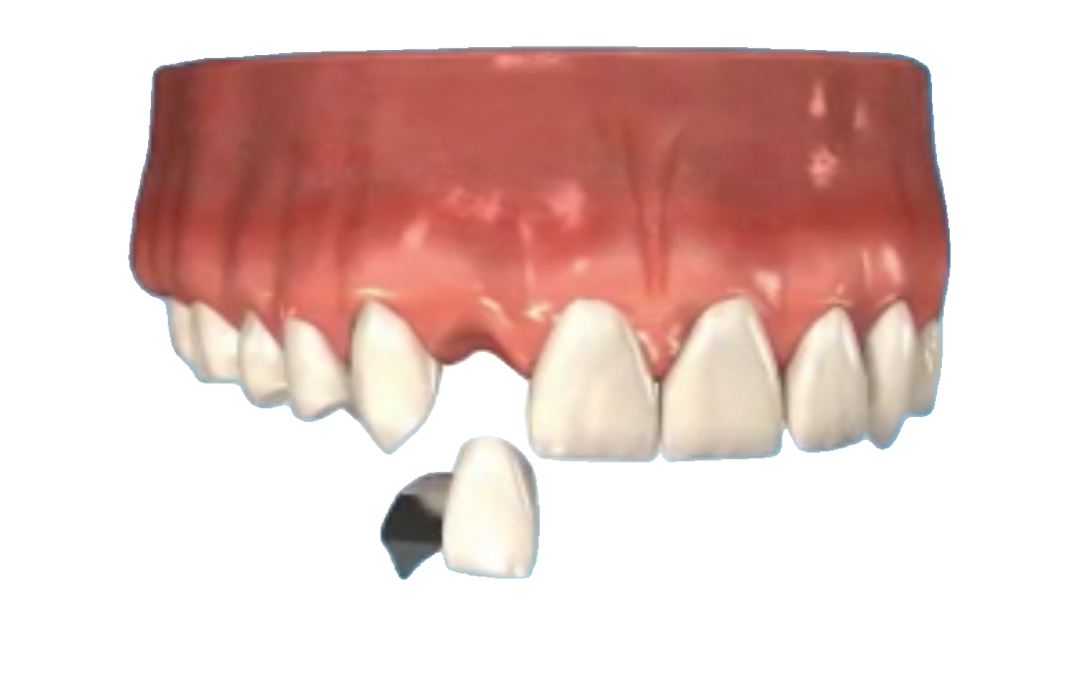
What Is a Dental Bridge?
A dental bridge replaces a missing tooth with a false one. The teeth on either side of the gap hold it in place.
A bridge is fixed, not removable. It stays in your mouth the way a natural tooth does, and you clean it where it sits.
The false tooth is called a pontic. The teeth carrying it are called abutments. Your dentist joins them into one solid piece, which is why a bridge feels stable when you bite.
How a Bridge Is Held in Place
Conventional bridge
The most common type. Your dentist shapes the teeth on both sides of the gap and fits crowns over them. The false tooth sits between the two crowns.
Cantilever bridge
This one anchors to a tooth on one side only. Your dentist chooses it when there is a sound tooth on just one side of the gap.
Resin-bonded bridge
A false tooth with thin wings that bond to the back of the neighbouring teeth. Very little enamel is removed, so it suits front teeth well.
Implant-supported bridge
Where several teeth in a row are missing, implants can carry the bridge instead of natural teeth. Nothing healthy needs shaping.
Who a Bridge Suits
- People missing one tooth, or two or three in a row
- Anyone with strong, healthy teeth on either side of the gap
- Patients who want a fixed replacement rather than something removable
- People who would rather avoid surgery
- Anyone who cannot have an implant because of bone loss or a medical condition
Your dentist checks the supporting teeth first. A bridge leans on them entirely, so they need to be sound before anything else happens.
Bridge, Implant or Denture?
All three replace missing teeth. They work in different ways.
- A bridge uses the neighbouring teeth for support and stays fixed
- An implant replaces the root itself and stands on its own
- A denture rests on the gum and comes out for cleaning
A bridge is quicker than an implant and steadier than a denture. The trade-off is that two healthy teeth are shaped to carry it.
Where those teeth already need crowns, the trade-off costs you nothing. They were going to be crowned in any case, so the bridge comes almost free of extra damage.
What the Treatment Involves
- Your dentist examines the gap and x-rays the supporting teeth.
- Those teeth are shaped under local anaesthetic, and impressions are taken.
- A temporary bridge protects them while the laboratory builds the real one.
- The finished bridge is tried in, and your bite and the shade are checked.
- Your dentist cements it in place.
Most bridges take two visits, a week or two apart. You leave the first appointment with a temporary bridge, so there is no visible gap in between.
Cleaning Under a Bridge
This is the part that decides how long your bridge lasts.
You cannot floss around a bridge the ordinary way. The false tooth is joined to the crowns beside it, so floss will not pass down between them.
- Use superfloss or a floss threader to clean underneath the false tooth
- Run an interdental brush along the gum line every day
- Brush twice daily, and pay attention to where each crown meets the gum
- Keep your check-ups so your dentist can inspect those edges
Bridges fail at the supporting teeth, not in the middle. Decay under a crown or gum disease around it is what loosens a bridge, and you can prevent both.
How Long a Bridge Lasts
A well-made bridge lasts ten years or more. Many go considerably longer than that with good cleaning.
What shortens it is decay at the edge of a crown, gum disease around the supporting teeth, or heavy grinding. If you grind your teeth, say so. A night guard protects the work.
When a Bridge Needs Attention
- A bridge that feels loose needs checking straight away
- Sensitivity in a supporting tooth can mean decay has started underneath
- Bleeding gums around the bridge point to plaque collecting at the margins
- Food packing under the false tooth suggests the fit has changed
Book an appointment if you notice any of these. A loose bridge caught early can often be cleaned and re-cemented. One left alone lets decay in underneath, and then the supporting tooth is at risk as well.
Related Reading
- Dental Implants – the option that replaces the root as well
- Dentures – removable replacement for several teeth
- Dental Crowns – the caps that anchor a bridge
- Gum Disease – the leading cause of adult tooth loss
- Dental Extraction – when a tooth cannot be saved