
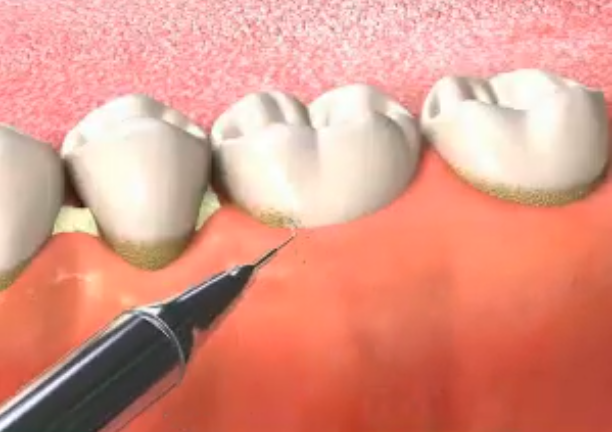
What Root Planing Is
Root planing is a deep clean below the gum line. Your dentist removes hardened tartar from the root surface, then smooths that surface.
It is a treatment for gum disease, not a routine clean. A normal clean works above the gum, where you can reach.
This page covers the treatment itself. For the condition behind it, see gum disease.
Why It Becomes Necessary
Healthy gum sits tightly against the tooth. There is a shallow gap of one to three millimetres, and a brush and floss can keep it clean.
When gum disease sets in, that gap deepens into a pocket. Once the pocket passes about four millimetres, nothing you do at home reaches the bottom.
Plaque hardens into tartar down there, and the tartar holds more bacteria against the root. The pocket then deepens further.
Root planing breaks that cycle. Without it, the bone supporting the tooth keeps receding.
Scaling and Root Planing Are Two Things
Scaling removes deposits from the tooth. Root planing smooths the root afterwards so the surface is clean and even.
The smoothing matters more than it sounds. Bacteria cling to a rough root, and the gum cannot reattach to one.
They are usually done together in the same appointment, which is why you will hear them named as one treatment.
What Happens During Treatment
- Your dentist measures the pocket depth around every tooth and records it.
- The area is numbed, so the treatment is not painful.
- Tartar is removed with hand instruments, an ultrasonic scaler, or both.
- The root surface is planed smooth.
- The pocket is flushed, and an antibacterial gel is sometimes placed.
The mouth is usually treated in sections across more than one visit. That keeps each appointment manageable and lets one area settle.
Those pocket measurements become the baseline. Everything afterwards is judged against them.
The First Week Afterwards
- Tenderness for a few days, which mild pain relief handles.
- Sensitivity to cold, because clean root surface is now exposed.
- Some bleeding when you brush at first.
- Warm salt water rinses, from the day after.
- Soft food for a day or two if the gums are sore.
Keep brushing the treated areas gently. Stopping because they are tender lets plaque build straight back.
Gum Recession Is Expected
Gums often look as though they have shrunk afterwards. Patients sometimes think the treatment caused it.
What has happened is that swelling has gone down. The gum was puffed up over lost bone, and now it sits at the true level.
Small gaps between teeth can appear for the same reason. It is a sign the inflammation has cleared.
Does It Work
Your dentist re-measures the pockets after about six to eight weeks. Success is pockets that have shallowed and gums that no longer bleed.
Most people improve substantially. Deep pockets that do not respond may need a referral for surgical treatment.
Bone already lost does not come back. The aim is to stop the loss where it is.
Keeping the Result
Gum disease returns if the cleaning stops. Most patients move to maintenance visits every three or four months rather than six.
Cleaning between the teeth daily matters more than how hard you brush. Floss or interdental brushes reach where a toothbrush cannot.
Smoking is the strongest risk factor. It reduces blood flow to the gum, so healing after treatment is poorer.
Is It Painful
The treatment itself is not painful, because the area is numbed first. You will feel pressure and hear the instruments.
The tenderness afterwards is mild for most people, and it fades within a few days. Ordinary pain relief is enough.
Tell your dentist if you are anxious about it. Treating fewer teeth per visit makes each appointment shorter and easier.
Why It Matters Beyond Your Gums
Gum disease is the leading cause of tooth loss in adults, ahead of decay. Teeth are lost because their support disappears, not because they rot.
The inflammation does not stay in the mouth either. Untreated gum disease is linked to heart disease and to poorer blood sugar control in diabetes.
It runs both ways with diabetes. Poorly controlled blood sugar worsens the gums, and inflamed gums make blood sugar harder to control.