
What Bleeding Gums Mean
Bleeding gums are common. They are not normal. If your gums bleed when you brush or floss, something is irritating them.
Healthy gums do not bleed. They are firm, pale pink, and they sit tightly against the teeth.
Most bleeding starts with plaque, the soft sticky layer of bacteria that forms on your teeth every day. Left on the tooth, it inflames the gum edge.
What Causes Bleeding Gums?
Plaque and tartar
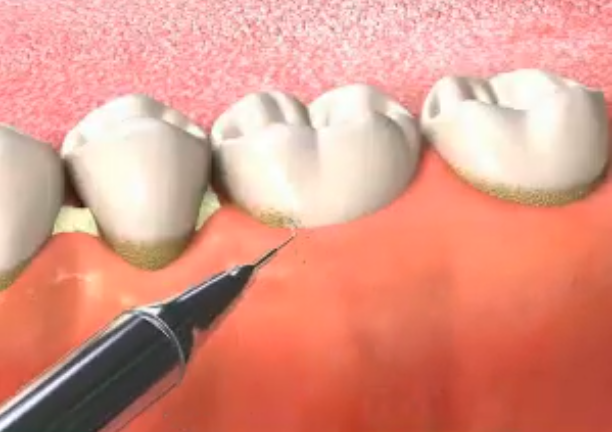
The most common cause by far. Plaque that stays on the tooth hardens into tartar, which sits below the gum line where brushing cannot reach it. This is the start of gum disease.
Brushing technique
Brushing too hard damages the gum rather than cleaning it better. So does a hard-bristled brush. Use a soft brush and let the bristles do the work.
If you have recently started flossing, some bleeding in the first week is normal as the gums firm up. It should settle, not continue.
Hormonal changes
Pregnancy, puberty and menopause all make gums more reactive to plaque. Pregnancy gingivitis is common and worth telling your dentist about.
Medication and medical conditions
Blood thinners make any bleeding more obvious. Diabetes makes gum infection harder to control. Some medications cause the gums to overgrow, which traps more plaque.
Tell your dentist what you take. It changes what treatment makes sense.
Smoking
Smoking reduces blood flow to the gums, so they may not bleed even when disease is present. That masks the warning sign rather than removing the problem.
Swollen Gums Without Bleeding
Swelling on its own points to something more localised. A single swollen spot may be an abscess or food trapped below the gum. Swelling across the whole mouth is more often plaque-related.
See a dentist the same day if your face swells, or if the swelling comes with fever or severe pain. That means infection is spreading.
Treatment Options
The right treatment depends on how early the problem is found. Acting early gives the best outcome, and early gum inflammation reverses completely.
Professional cleaning
Your dentist removes the plaque and tartar you cannot reach at home. This reduces the inflammation and lets the gums heal.
Deep cleaning (scaling and root planing)
Where the problem has gone below the gum line, a deeper clean removes bacteria from the root surface and helps the gum reattach. Read more about root planing.
Oral hygiene coaching
We show you how to brush and floss properly for your mouth. Small changes to a daily routine often stop bleeding within days.
Orthodontic treatment
Crooked or crowded teeth trap plaque where no brush reaches. Straightening them makes cleaning possible. See braces.
What You Can Do at Home
- Brush twice daily for two minutes with a soft brush and fluoride toothpaste
- Clean between your teeth daily with floss or an interdental brush
- Do not stop cleaning an area because it bleeds, that makes it worse
- Cut down on sugary drinks and snacks between meals
- Stop smoking
- Rinse with warm salty water to ease soreness, as a short-term measure only
Why Early Action Matters
Bleeding gums are an early warning. Ignored, gingivitis turns into periodontitis, and the bone that holds your teeth starts to break down.
That leads to loose teeth, persistent bad breath, and eventually tooth loss. The early stage reverses completely. The advanced stage does not.
Book an examination if your gums have bled for more than a week, or if they look swollen or have pulled back from your teeth.
Questions About Bleeding Gums
Should I stop brushing where it bleeds? No. That is the most common mistake. Bleeding means that area needs cleaning most. Brush it gently with a soft brush and the bleeding usually settles within a week.
Is a mouthwash enough? No. Antiseptic rinses reduce bacteria for a short time but cannot remove plaque or tartar. They help alongside brushing and flossing, never instead of them.
Can bleeding gums heal on their own? Early inflammation often settles once the plaque is cleaned off properly. Once tartar has formed below the gum line, home cleaning cannot reach it and you need a professional clean.
Related Reading
- Gum Disease – what bleeding gums develop into
- Root Planing – the deep clean below the gum line
- Routine Dental Checkup – catching it before it spreads
- Polishing and Fluoride – part of a professional clean
- Braces – straightening teeth that trap plaque