
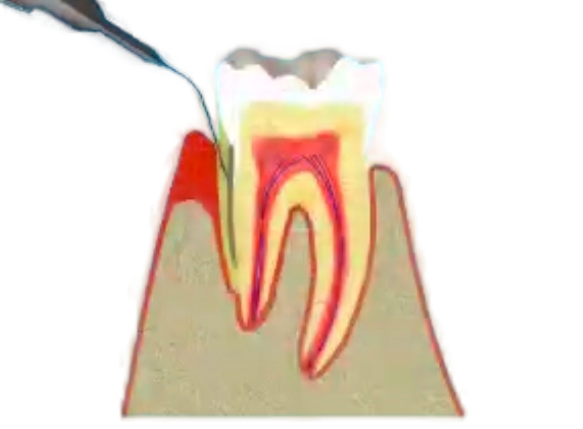
What Is Gum Disease?
Gum disease is an infection of the tissue that holds your teeth in place. It starts with plaque, the soft sticky film of bacteria that forms on your teeth every day.
Plaque that is not brushed away hardens into tartar. Tartar sits below the gum line where a toothbrush cannot reach, and the bacteria in it inflame the gum.
Gum disease is the leading cause of tooth loss in adults. It is also largely preventable, and in its early stage it reverses completely.
The Two Stages
Gingivitis, the early stage
The gums become red, puffy and bleed easily when you brush. The bone holding your teeth is not damaged yet.
Gingivitis is reversible. A professional clean plus better daily cleaning at home usually settles it within weeks.
Periodontitis, the advanced stage
Left untreated, the infection spreads below the gum line. The gum pulls away from the tooth and forms a pocket, and the bone that anchors the tooth begins to break down.
Bone loss cannot be reversed. Treatment at this stage aims to stop the damage getting worse and keep the teeth you still have.
Signs to Watch For
- Gums that bleed when you brush or floss
- Red, swollen or tender gums
- Persistent bad breath or a bad taste
- Gums that look like they are pulling back from the teeth
- Teeth that look longer than they used to
- A tooth that feels loose or has shifted
- A change in how your teeth meet when you bite
- Pus between the gum and the tooth
Early gum disease is often painless, which is why it goes unnoticed. Bleeding is usually the first sign anyone spots. Read more about swollen and bleeding gums.
What Causes It
- Plaque left on the teeth, the direct cause in almost every case
- Smoking or vaping, which reduces blood flow to the gums and hides the bleeding
- Diabetes, which makes infection harder for the body to control
- Hormonal changes in pregnancy and menopause
- Some medications that reduce saliva or cause gum overgrowth
- Crooked or crowded teeth that trap plaque where a brush cannot reach
- Grinding your teeth, which adds strain to already weakened support
Tell your dentist about your medical history and any medication you take. Both change how gum disease behaves and how we treat it.
Receding Gums
Gum recession is what happens as the disease advances: the gum tissue and the bone beneath it pull back, exposing the root of the tooth.
The exposed root has no enamel on it, so it is softer and far more sensitive to hot and cold. It also decays more easily than the crown of the tooth does.
Recession is not always gum disease. Brushing too hard, grinding and orthodontic movement all cause it too. Your dentist works out which applies before treating it.
How We Treat Gum Disease
| Stage | Treatment | Outcome |
|---|---|---|
| Gingivitis | Professional clean plus hygiene coaching | Usually reverses fully |
| Early periodontitis | Scaling and root planing, a deep clean below the gum | Stops progression, gums reattach |
| Advanced periodontitis | Deep cleaning, ongoing maintenance, referral if needed | Aims to hold the position |
Professional cleaning
Your dentist or hygienist removes the plaque and tartar you cannot reach at home. This alone settles most early cases.
Scaling and root planing
A deeper clean that reaches below the gum line and smooths the root surface, so the gum can reattach to the tooth. Read more about root planing.
Ongoing maintenance
Once you have had periodontitis, you stay at higher risk. Your dentist will set a shorter recall interval than the usual six months.
Treatment does not end when the gums stop bleeding. Keeping the disease inactive is the long-term goal, and that depends more on your daily cleaning than on anything we do in the chair.
Preventing It
- Brush twice daily for two minutes with a fluoride toothpaste
- Clean between your teeth every day with floss or an interdental brush
- Stop smoking, which is the single biggest change most patients can make
- Keep diabetes well controlled if you have it
- Come for a check-up and clean at the interval your dentist sets
Book an examination if your gums bleed, look swollen, or a tooth feels loose. Nobody can stage gum disease from a description. Your dentist measures the pockets around each tooth and shows you the readings.
Related Reading
- Swollen and Bleeding Gums – the earliest sign, explained
- Root Planing – the deep clean that treats periodontitis
- Routine Dental Checkup – how we catch it early
- Polishing and Fluoride – part of a professional clean
- Bruxism – grinding adds strain to weakened gums