
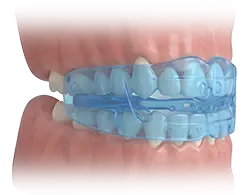
What Early Interceptive Treatment Is
Early interceptive treatment guides how a child's jaw and teeth develop, while they are still growing.
It works with growth rather than against it. That is the whole idea. A jaw that is still forming can be influenced, and once growth finishes the same correction takes far more effort.
It does not replace braces for every child. It reduces what braces have to do later, and in some cases removes the need for teeth to be taken out.
When to Bring Your Child
Around age seven is the usual answer, and there is a reason for that age.
By seven, the first adult molars and front teeth are usually through. That is enough for your dentist to see how the bite is developing, while several years of growth remain to work with.
Come sooner if you notice something specific. Waiting for all the adult teeth to arrive is the common mistake, because by then the opportunity has largely passed.
Signs Worth an Appointment
- Breathing through the mouth rather than the nose, day or night
- Snoring, or sleeping with the mouth open
- Thumb sucking or dummy use continuing past about age four
- Front teeth that do not meet when the back teeth are together
- Upper teeth biting inside the lower ones on one side
- A jaw that shifts to one side when closing
- Losing baby teeth much earlier or later than other children
- Difficulty chewing, or persistently noisy eating
None of these is an emergency. All of them are easier to address at seven than at fourteen.
What It Can Correct
A narrow upper jaw
An expander widens the upper jaw gradually, creating room for adult teeth that would otherwise come through crowded. The bones of the palate are still able to widen at this age.
A crossbite
Where upper teeth bite inside the lower ones, the jaw learns to shift sideways to close comfortably. Corrected early, the shift stops. Left alone, the jaw grows around it.
Habits shaping the jaw
Thumb sucking and tongue position push teeth forward over years. Appliances and exercises break the habit, which is what Myobrace is built around.
Space that is closing
Where a baby tooth has come out early, a space maintainer holds the gap so the adult tooth underneath has somewhere to arrive.
What the First Visit Involves
- Your dentist examines the teeth, gums and how the jaws meet.
- X-rays show the adult teeth still forming under the gum.
- Breathing, swallowing and any habits are checked.
- You are told plainly whether anything needs doing now.
Often the answer is to watch and review in a year. An assessment is not a commitment to treatment, and being told nothing is needed yet is a good outcome.
Will My Child Still Need Braces?
Often yes, and it is worth being clear about that from the start.
Early treatment is usually the first of two stages. It creates room and corrects the way the jaws relate to each other while that is still possible. A shorter course of braces or clear aligners then aligns the individual teeth once they have all arrived.
The point is not to avoid braces. It is to make the second stage shorter and simpler, and to avoid problems that become difficult once growth has finished.
A small number of children are straightened enough by the first stage alone. Your dentist will not promise that at the outset, because it depends on how the adult teeth come through.
What It Saves Later
- Shorter braces treatment in the teenage years, or occasionally none
- Fewer adult teeth removed to make room
- Less chance of a permanent tooth becoming trapped in the bone
- Front teeth pulled back out of harm's way before a knock chips them
Not every child needs it, and no honest dentist would say otherwise. The value is in finding out early which group your child is in.
Book an assessment if your child is around seven, or sooner if you have noticed mouth breathing, snoring or thumb sucking. Bring anything you have wondered about, however small it seems.
Related Reading
- Myobrace – treating the habits behind crooked teeth
- Crooked Teeth – why teeth grow out of line
- Traditional Braces – what usually follows in the teenage years
- Pit and Fissure Sealants – protecting new adult back teeth
- Pulpectomy – saving a badly decayed baby tooth