
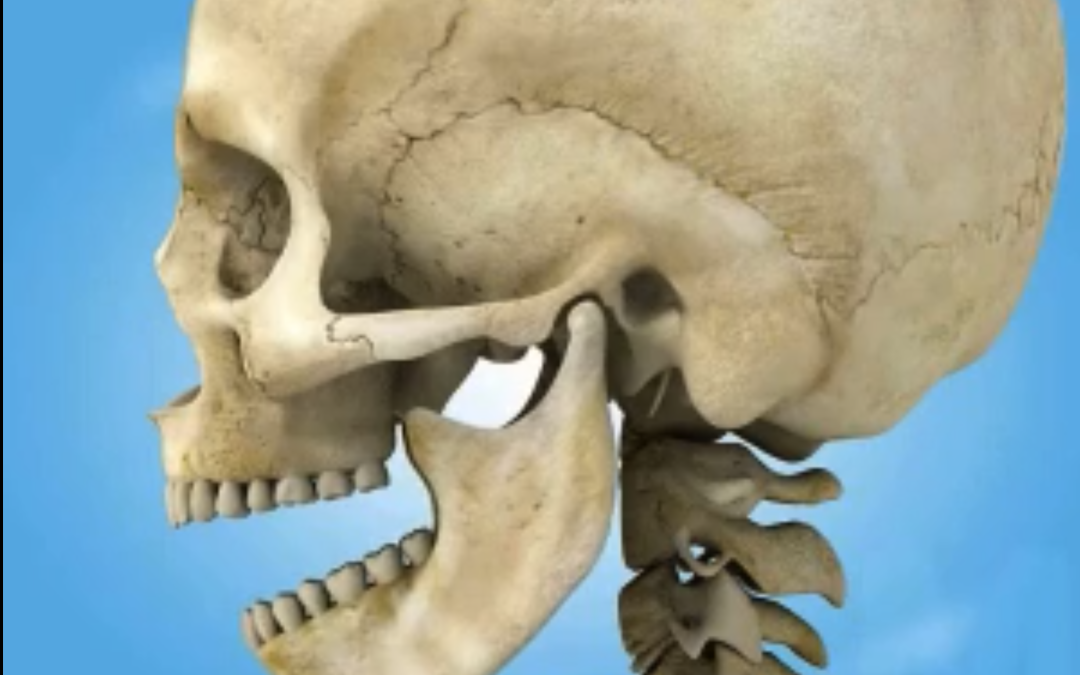
What the Jaw Joint Does
You have a jaw joint just in front of each ear. Put a finger there and open your mouth, and you will feel it move.
It is the most used joint in the body. It works every time you talk, chew, yawn or swallow.
The joint both hinges and slides, with a small disc cushioning it. Problems usually come from the muscles around it rather than the joint itself.
The Symptoms
- Aching in front of the ear, or along the side of the face.
- Clicking, popping or a grating sound when you open.
- Jaw stiffness, particularly first thing in the morning.
- Headaches around the temples.
- Earache with no ear infection.
- Difficulty opening wide, or the jaw catching briefly.
- Tenderness in the cheek muscles when you press them.
Clicking on its own is common and often harmless. It matters when it comes with pain, or when the jaw starts locking.
Many people see a doctor for the headaches or the earache first. The jaw is not an obvious suspect.
What Causes It
Clenching and grinding
This is the most common cause we see. Hours of overnight clenching leaves the muscles fatigued and the joint loaded.
Most people do not know they do it. See bruxism for the grinding habit itself.
Stress
Stress raises muscle tone through the day, and many people hold their teeth together while concentrating. Symptoms often track busy periods.
An uneven bite
If your teeth do not meet evenly, the muscles work harder to find a comfortable position. A high filling or crown can start this.
Injury and habits
A blow to the jaw, a long dental appointment, nail biting, chewing pens and constant gum chewing all contribute. Arthritis affects the joint in older patients.
What Your Dentist Checks
- How far you can open, and whether the jaw deviates to one side.
- Clicking, and at what point in the movement it happens.
- Tenderness in the joint and in the chewing muscles.
- Wear facets on your teeth, which show grinding.
- How your teeth meet when you bite together.
- An x-ray or scan, where the joint itself needs looking at.
Tooth wear is often the clearest evidence. Flattened tips tell your dentist how long the grinding has gone on.
What Helps
Most cases settle with simple measures. Treatment starts with the least invasive option and only escalates if needed.
- Soft food for a period. Resting the joint lets inflamed muscles recover.
- Heat. A warm compress on the cheek for fifteen minutes eases muscle pain.
- A night guard. This protects the teeth and reduces the load from clenching.
- Gentle jaw exercises. Your dentist can show you a short daily routine.
- Bite adjustment. Where a high spot is the cause, reshaping it can resolve the problem quickly.
- Referral. Physiotherapy or a specialist opinion for cases that do not settle.
What to Avoid
Stop chewing gum, and avoid hard or very chewy food while symptoms are active. Do not test the clicking repeatedly.
Try not to open wide. Support your chin when you yawn, because a wide yawn is a common trigger for locking.
Notice whether your teeth touch during the day. They should only meet when you swallow or chew.
When to Come In
- The jaw locks open or shut, even briefly.
- Pain that has lasted more than two weeks.
- You cannot open wide enough to eat normally.
- Swelling over the joint.
- Your bite feels like it has changed.
A jaw that locks shut needs seeing quickly. The longer it stays restricted, the harder it is to recover full movement.
How Long It Takes to Settle
Most people improve within a few weeks of starting treatment. Muscle pain settles faster than joint problems do.
Symptoms often come and go rather than disappearing cleanly. A quiet month followed by a flare-up during a stressful week is a normal pattern.
Because stress drives so many cases, the jaw tends to track what is happening in your life. Recognising that pattern helps you act early.
Why It Is Worth Treating
Left alone, the grinding behind most cases keeps wearing your teeth down. Enamel does not grow back.
Worn teeth become sensitive, then chip, and eventually need crowns. A night guard costs a fraction of rebuilding a worn bite.
Broken sleep and daily headaches take their own toll. Many patients only notice how much it affected them once it stops.
Related Reading
- Bruxism and teeth grinding
- Crowns, for teeth worn down by grinding
- Routine dental check-up