
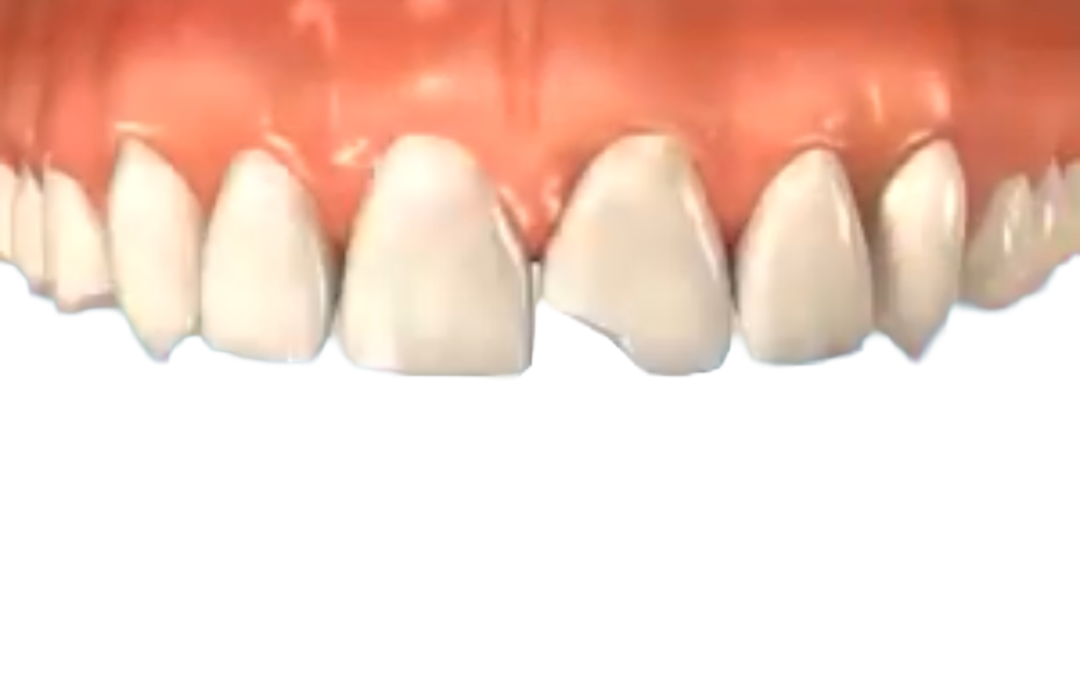
What Counts as a Damaged Tooth
A tooth can be chipped, cracked or broken. The three are not the same thing, and they are not treated the same way.
The size of the visible damage tells you very little. A small chip can be harmless. A hairline crack you can barely see can reach the nerve.
This page explains what each type of damage means and what to do first. If you already know which repair you want, go to repair my teeth.
The Types of Damage
A chipped edge
A piece of enamel breaks off, usually from a front tooth or the tip of a back tooth. There is often no pain at all.
Small chips matter because the rough edge cuts your tongue and lip. The exposed surface also stains faster than the rest of the tooth.
A cracked tooth
The tooth is still in one piece, but a line runs through it. You may feel a sharp twinge when you bite down and release.
That release pain is the clearest sign of a crack. It happens because the two halves flex apart and then press back together.
A broken cusp
Part of the biting surface breaks away, often around a large old filling. The tooth is usually not painful, because the nerve is untouched.
A split tooth
A crack that was left too long can travel until the tooth separates into parts. By that stage the tooth may not be savable.
This is why a crack is worth checking early. The same tooth that needed a simple repair in March can need removing by December.
What to Do in the First Hour
- Rinse your mouth with warm water to clear any fragments.
- Keep any broken piece in milk or saliva, and bring it with you.
- Press clean gauze on the area if the gum is bleeding.
- Use a cold compress on the outside of your cheek for swelling.
- Cover a sharp edge with sugar-free chewing gum until you are seen.
Do not chew on that side. Avoid very hot and very cold drinks, because an exposed layer reacts sharply to both.
When It Is an Emergency
Phone your practice the same day if any of these apply.
- The tooth is bleeding from the middle rather than the gum.
- You can see a pink or red dot in the broken surface.
- The pain is constant instead of triggered by biting.
- Your face or gum is swelling.
- The whole tooth has been knocked loose or out.
A knocked-out adult tooth is the most urgent of these. Keep it in milk, do not scrub it, and get to a dentist within the hour.
How Each Type Is Repaired
Your dentist matches the repair to how much tooth is left and whether the nerve is involved.
- Small chips. Dental bonding adds tooth-coloured material to rebuild the edge in one visit.
- Rough or uneven edges. Cosmetic contouring smooths enamel back instead of adding to it.
- Front teeth with several chips. Veneers cover the whole visible surface.
- A broken cusp on a back tooth. Inlays and onlays replace the missing section precisely.
- A cracked or heavily broken tooth. A crown holds the remaining tooth together.
- Damage that reaches the nerve. Root canal treatment is done first, then the tooth is crowned.
What Happens If You Leave It
Enamel does not grow back. A damaged tooth stays damaged until it is repaired, and the opening lets bacteria in.
Decay then starts underneath, where you cannot brush it away. Cracks also widen every time you bite, because the flexing never stops.
Repairs get larger and more expensive the longer you wait. A chip fixed early costs a fraction of the crown it becomes.
Why Teeth Break
Trauma is the obvious cause. Sport, a fall, or biting something hard like ice, a bone or a pen lid will all do it.
The quieter cause is grinding. If you clench at night, see bruxism, because a guard prevents the next break.
Large old fillings weaken a tooth too. The remaining walls are thin, so they fracture under normal chewing.